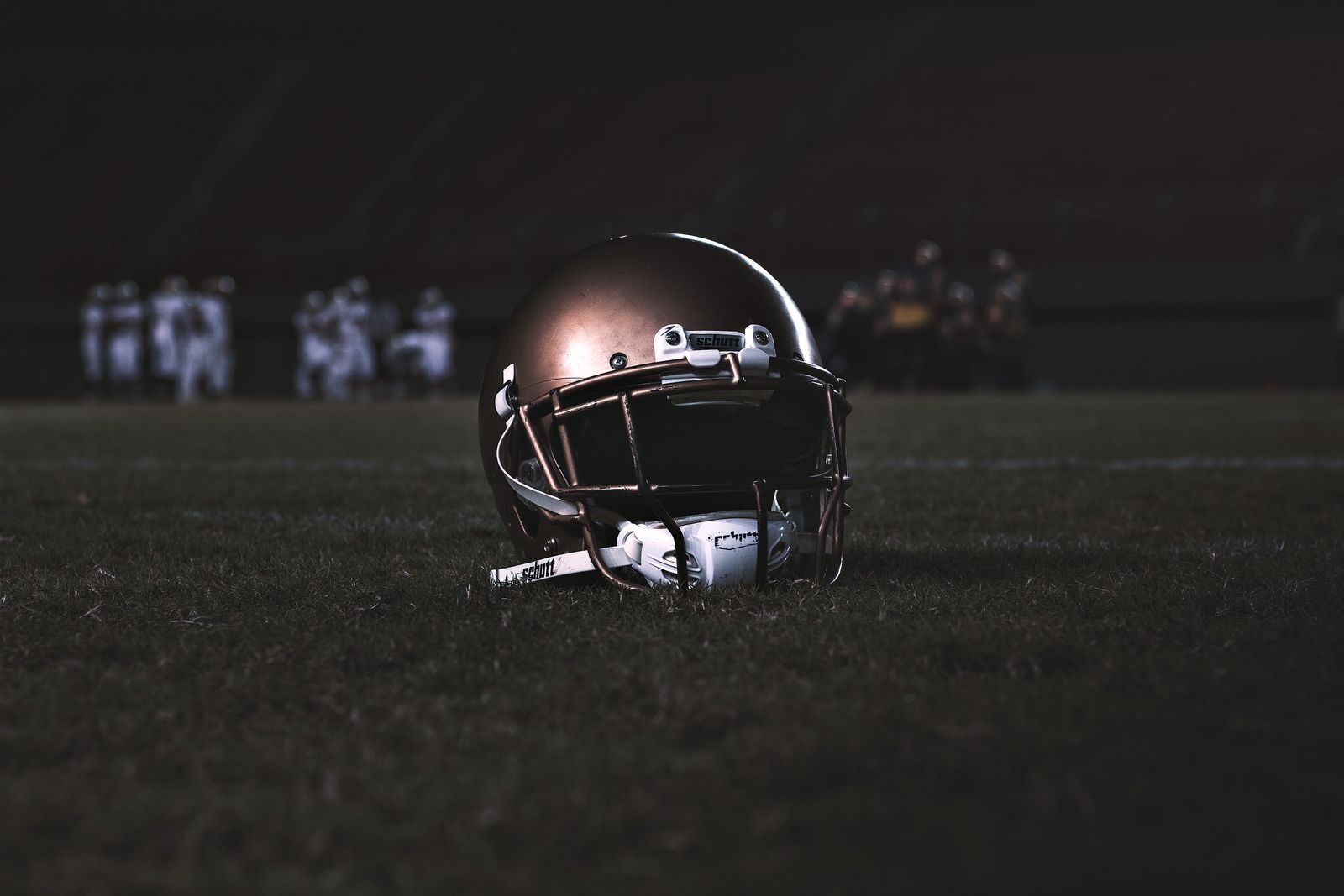
Football Helmet Fit and NOCSAE Certification
A fitting routine you can follow, and the certification rules behind every helmet.
NOCSAE GuidanceThe helmet is where football equipment and safety meet most directly. Two things matter: that the helmet is certified, and that it fits the player wearing it today.
Fitting a Football Helmet, Step by Step
- Start with dry hair styled the way the player will wear it in games.
- Measure the head just above the eyebrows and around the back, then use the maker’s chart to pick a starting size.
- Check the front edge: it should sit roughly one to two finger widths above the eyebrows.
- Check the ear holes: they should line up with the ears.
- Inflate or adjust the liner where the helmet allows it, until the fit is snug all round.
- Fasten the chin strap centered on the chin, snug enough that the helmet moves with the head.
- Do the movement test: when someone gently turns the face mask, the skin of the forehead should move with the helmet rather than the helmet sliding.
- Check the face mask: it should not block vision and should sit a few finger widths from the nose.
Re-check fit through the season. Haircuts, growth and liner wear all change it.
Certification, Recertification and the Ten-Year Rule
- Certified when new: the helmet and face mask carry marks showing they met the NOCSAE standard when made.
- Recertified to stay certified: per NOCSAE, helmets and face masks must be reconditioned and recertified according to the manufacturer’s instructions, by a licensed recertification company.
- Frequency: reconditioners report that manufacturers require it at least every other year; annual is widely recommended.
- Useful life: a helmet more than ten years past initial certification is not eligible for recertification.
- Failures: a helmet that fails recertification must not be used.
- Labels: recertified helmets get a dated label naming the company and year.
Add-Ons and Accessories
Visors, sensors, extra padding and decorative add-ons are popular. NOCSAE’s statement on add-on products explains that attaching a product to a certified helmet creates a new model, and the helmet maker can declare the certification void. Products that are not attached — skull caps, headbands, mouthguards — do not change the helmet’s certification. Only use accessories the helmet manufacturer approves for that model, and check your league or state association’s rules too.
Frequently Asked Questions
How often does a football helmet need to be recertified?
Follow the helmet maker’s instructions. The athletic equipment reconditioners’ association (NAERA) has said that manufacturers require recertification at least every other year, and it recommends doing it every year.
How old can a helmet be?
NOCSAE says a helmet is eligible for recertification only if it is not more than ten years from the date of initial certification, under NAERA’s useful-life rule. Other problems can disqualify it sooner.
Do stickers or add-on padding void a helmet’s certification?
NOCSAE says products attached to a certified helmet create a new model, and the maker may then void the certification. Items that are not attached, such as skull caps and headbands, do not. Check with the helmet manufacturer before adding anything.
Read NOCSAE’s Recertification Guidance
NOCSAE explains certification, recertification and the ten-year eligibility rule in its own words.
Visit NOCSAE