The Coach’s Equipment Room Checklist
Inventory, inspection and recertification — a system for the whole season.
NOCSAE StandardsFor coaches and team parents, football equipment is a logistics job as much as a safety one. A good equipment room has a system: what is issued, to whom, in what condition, and when it is due for recertification.
Before the Season
- Inventory every helmet by serial number, size, model and last recertification year.
- Pull any helmet past the ten-year eligibility limit or with a lapsed recertification and send eligible helmets to a licensed reconditioner.
- Inspect shoulder pads for cracked plates, broken laces and flattened padding.
- Count chin straps, face masks, hardware and spare parts.
- Check the league rulebook for any equipment changes this season.
- Schedule a fitting night with enough adults who know how to fit helmets.
Fitting night, organized
Fitting night runs smoothly when it works like a production line. Set up stations in order: check-in and head measurement, helmet fitting, shoulder pad fitting, pants and girdle sizing, and a final check where an experienced adult watches each player move in full gear. Record every item issued against the player’s name on the sign-out sheet, including the helmet serial number. Players who fall between sizes should try both, and anyone who cannot be fitted properly that night should be noted for a follow-up rather than sent home in the closest size. Parents appreciate a short handout explaining what the family needs to buy — usually cleats, a mouthguard and a cup.
The Equipment Room Checklist
- Helmet inventory sheet with recertification dates
- Spare chin straps, face-mask clips and screws
- Helmet liner inflation tool if your helmets need one
- Spare mouthguards in several sizes
- Shoulder pad laces and replacement straps
- First-aid kit and ice packs
- Footballs sized for the age group, pump and needles
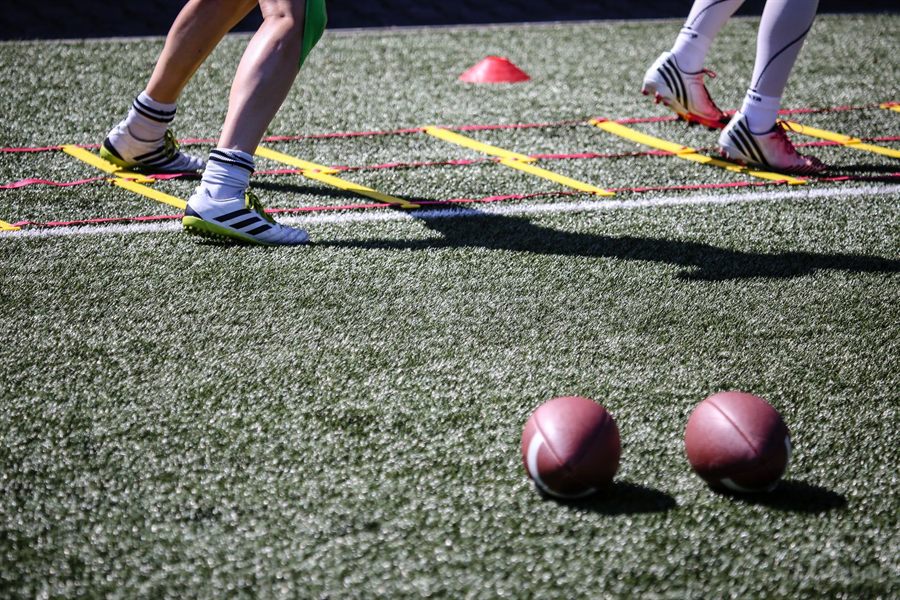
- Cones, agility ladders and tackling equipment
- Water containers and cups
- Cleaning and sanitizing supplies
- A sign-out sheet for issued gear
During and After the Season
Weekly
Quick look at helmets for cracks and loose parts; check chin straps and face-mask hardware.
After rain
Dry pads and helmets fully before storage to prevent mildew.
End of season
Collect, clean and inventory everything; flag items for recertification or retirement.
Records
Keep recertification paperwork; it is the proof that each helmet was handled correctly.
Storage matters more than most teams realize. Keep helmets and pads off concrete floors, in a dry, ventilated room away from direct heat, and never stack heavy items on top of helmets. A tidy room also makes the end-of-season count far faster.
Frequently Asked Questions
Who should fit helmets on a youth team?
Someone trained to do it, ideally using the helmet maker’s fitting instructions. Many leagues train volunteer equipment managers each season.
Can we recondition helmets ourselves?
You can clean helmets, but recertification must be done by a NOCSAE-licensed company. Do not repaint shells or swap parts that the maker does not approve.
Check the Official Standards
NOCSAE publishes the standards and recertification rules every equipment manager should know.
Visit NOCSAE